Tariffs: The Sequel
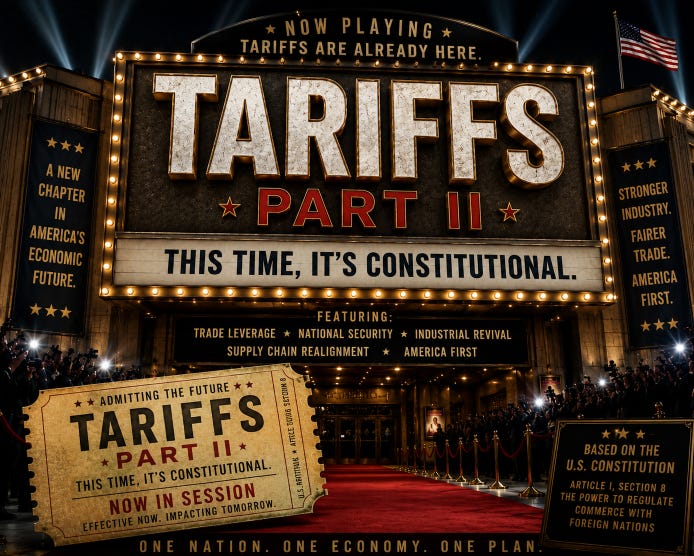
I like movies.
The sequels of original hits tend not to hold up as well because of such high expectations.
I’m thinking Jaws 2, Speed 2, and Dumb and Dumber To.
Tariffs are making a sequel, and I get a feeling the audience will give it a low rating.
Last year’s global tariffs pushed prices up temporarily.
The S&P 500 dropped about 12% in the four days after the announcement.
Then, about a week in, the administration paused most of the tariffs, and stocks staged one of their biggest single-day rallies since World War II, up 9.5%.
Then in February of this year, the Supreme Court struck most of the tariffs down, ruling that Congress has the power to levy tariffs and taxes.
Since then, the government has been issuing refunds from the first movie.
Over $70 billion of tariffs have been refunded.1
Last week, just as a temporary 10% tariff expired, the current administration imposed tariffs ranging from 10% to 12.5% on more than 80 countries, covering nearly all U.S. imports.
This will likely raise the current average tariff rate.
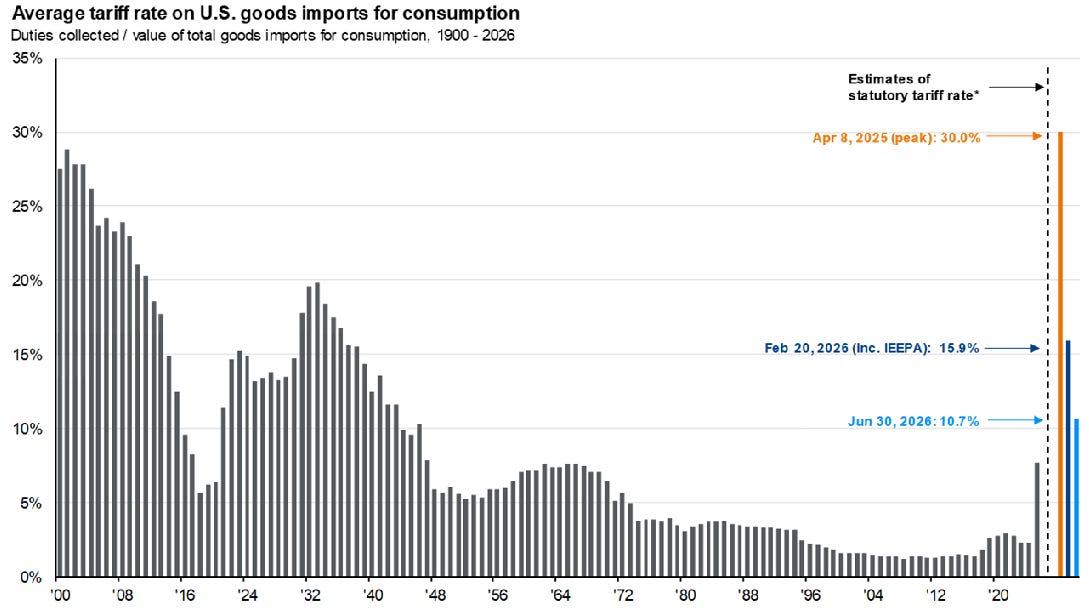
At the peak in April 2025, the estimated tariff rate hit 30%.
After the Supreme Court’s ruling in February, it fell to 15.9%.
By the end of June, it was 10.7%. Still, that’s almost four times higher than where tariffs stood at the start of last year, and the highest level since the 1940s.
Will the tariff sequel raise inflation?
Most likely, but probably not enough for the Fed to take action in the short run.
For starters, the new tariff rates are lower than the originals.
These rates are not a surprise. The market was slow to adapt to last year’s tariffs because they were true surprises.
Currently, the market believes companies will adapt quickly and not cause a ton of pain in the markets.
Philosopher Søren Kierkegaard once said:
Life can only be understood backwards; but it must be lived forwards.
The lower inflation data of June is the past. New tariffs and higher oil prices as the Iran conflict started back up again are what’s ahead.
So what will the Fed do?
Chair Kevin Warsh has said that the Fed will deliver price stability.
The White House wants rate cuts, and midterm season is heating up.
The Fed meets this Tuesday and Wednesday.
The CME FedWatch tool puts the odds of holding steady at about 64%.2
For September, the market puts the odds of a hike at 80%.2
One man’s opinion here: I don’t think the Fed moves at all until after November’s midterms.
Hiking or cutting rates before an election invites a political storm.
Right now, the Fed should thank the bond market for doing its job for them.
The 10-year Treasury rate has climbed to about 4.7%, from under 4% in February.
The 30-year mortgage just hit 6.58%, its highest in nearly a year.
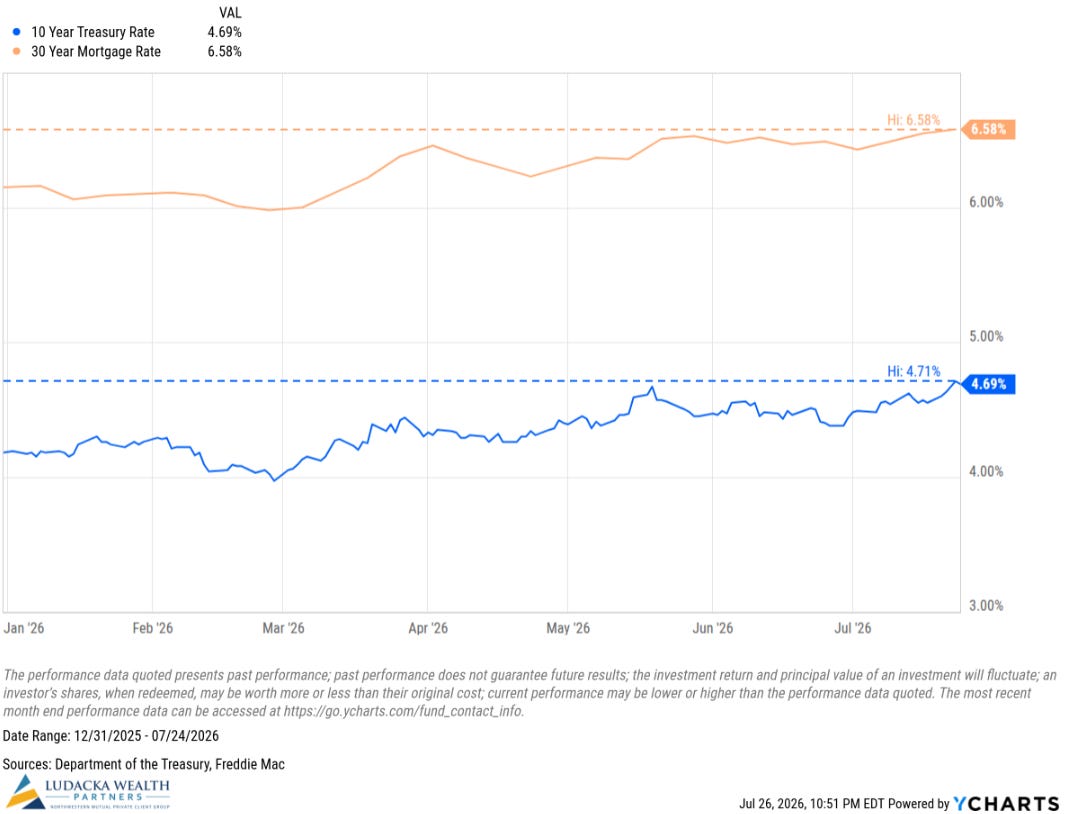
The bond market sees rates higher for longer.
We can’t know how this sequel ends.
Most sequels are worse than the original.
For everyone’s sake, let’s hope that doesn’t happen.
Keep learning. Keep growing. Keep going.
1: Source: Bloomberg. Tariff Refunds Trigger Widening in US Budget Gap for 2026. Chris Anstey. Daniel Flatley. July 13, 2026. https://www.bloomberg.com/news/articles/2026-07-13/us-tariff-refund-flood-tips-budget-to-bigger-deficit-versus-2025
2: Source: CME FedWatch Tool. July 26, 2026. https://www.cmegroup.com/markets/interest-rates/cme-fedwatch-tool.html
Now here’s what I’ve been reading, listening, and watching:
Should You Invest All at Once or Over Time? What History Actually Shows | Compounding Wisdom | Ludacka Wealth Partners
Why Young Men Choose to Be Alone | Prof G Podcast | Scott Galloway
Jean-Pierre Aubry: The State of Retirement Research | Rational Reminder
The Retirement Savings Time Bomb Ticks Louder by Ed Slott
The Pursuit of Happiness by Jeffrey Rosen
The Valuation Treadmill by James Park
A few posts on Faith: